


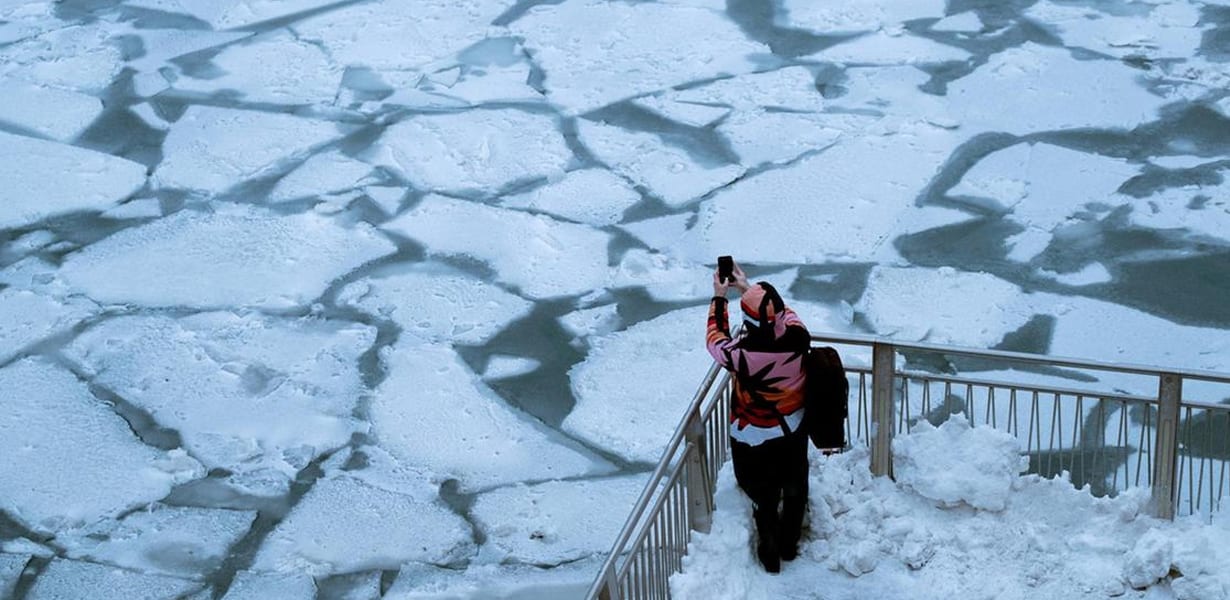






Residents in the midwestern and northeastern United States have been experiencing the bitter chill of record-shattering temperatures.
According to the Weather Channel (cited by USA Today), at least 160 cold temperature records were set in these areas over the course of the past few days— with 17 people dying as a result of the cold and snow.

At one point, the temperatures were colder than certain parts of Mars!
While the U.S. frosts over, Australia is currently experiencing its hottest month on record with temperatures rising to 113°F. The heat has caused wildfires, death, bushfires and a rise in hospital admissions.

It seems like the weather is going crazy all over the world— but why?
Many scientists believe the changes are being caused by global warming.
To some readers, this may seem counterintuitive: ‘Shouldn’t global warming create warmth?’— but that’s not exactly how it works. According to Martyn Chipperfield, a professor of atmospheric chemistry at the University of Leeds:
“Climate change can lead to extremes; it’s not like a regular change, everyone to the same extent at all times and places,” he said.
“Despite the overall warming, you can get … extreme cold events. That’s consistent with climate change and global warming.”

In fact, scientists back in 2016 predicted Americans would soon start experiencing colder temperatures in the late winter and early spring months— a prediction that now seems to be occurring. And, according to their hypothesis, it’s all because of the polar vertex.
The polar vertex is basically a fancy term for the air that moves around the North Pole. As temperatures in the Arctic increase, it causes the polar vertex to shift directions and become weakened.
When the polar vertex becomes weakened, the cold, Arctic air escapes, resulting in bursts of freezing temperatures across North America— particularly in the late winter and early spring months.

Luckily, USA Today reports the worst of the cold is now over— but there are still a few things to worry about.
On February 1, the outlet noted: “While morning temperatures [are] still near zero across a wide swath of the nation … the forecast for Friday and into the weekend [is] downright balmy.”
However, this in itself may cause difficulties. It’s not often we experience such large temperature variations in such a small period of time. In fact, Jeff Masters, meteorology director of the Weather Underground firm, said he doesn’t think he’s ever seen a temperature shift as notable as this one, adding:
“Past record-cold waves have not dissipated this quickly. Here we are going right into spring-link temperatures.”

While residents are likely excited to say goodbye to the cold, the Federal Emergency Management Agency (FEMA) warns this sudden shift in temperatures may result in dramatic effects. They state rapid snowmelt could lead to dangerous flooding, while also warning of the risk of broken water mains, potholes, and damages to homes.

So, despite the joyous anticipation of warmth, please remember to stay safe.
Please SHARE this with your friends and family.


