


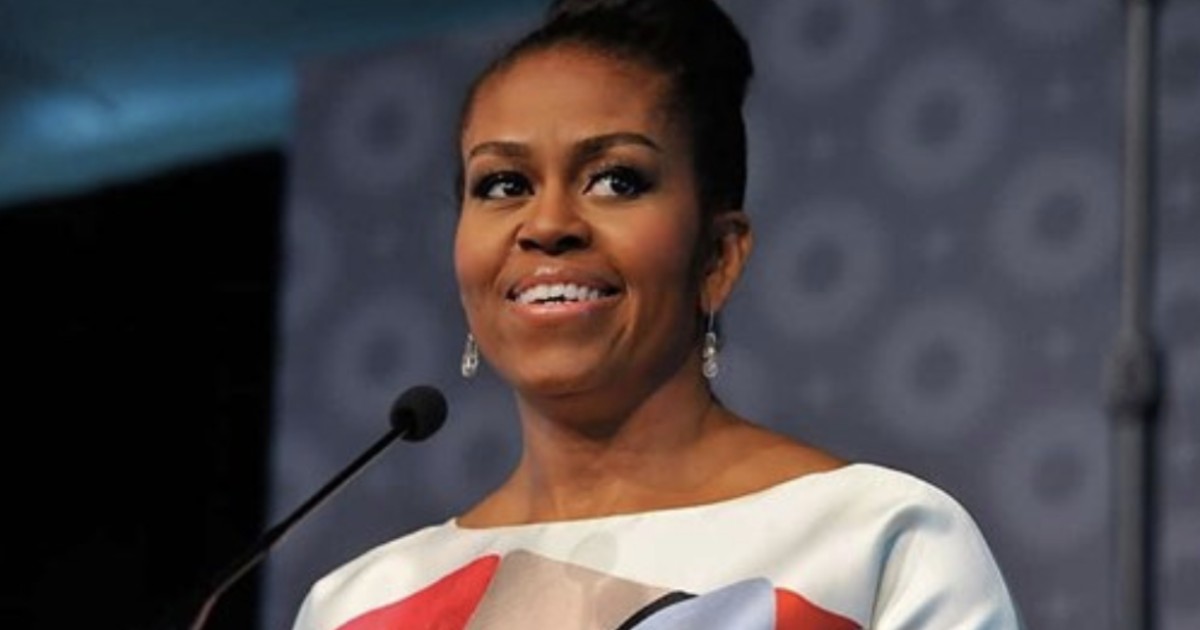





So much of our focus is placed on the president that we often forget the responsibilities and pressures endured by their families. Taking on the ‘First Lady’ role isn’t easy, and it was especially challenging for Michelle Obama. As the very first black woman in the White House, Michelle was under a lot of scrutiny at all times, with some sections of the media constantly waiting to criticize her every move and find any way they could to bring her down, but she got through it all with poise, grace, and unbelievable courage, becoming one of the most popular political figures in modern American history.
In a recent article for Elle Magazine, Michelle shed some light on her time in the White House, revealing some fascinating facts along the way.

A big part of being the First Lady is all about image and perception, and the way in which the First Lady presents herself is often subject to a lot of criticism from media outlets around the world.
Even though Michelle’s words and deeds are far more important than what she wears, she still had to spend time thinking about the clothes she chose for her many public appearances.
While we might assume that the First Lady is given a huge wardrobe with personal styling services and everything bought and paid for, Michelle revealed that she paid for almost everything she ever wore with money from her own pocket.
I paid for all my own clothes and accessories—with the exception of some items like the couture-level gowns I wore to formal events, which were lent to me by the designers and would later be donated to the National Archives, thus adhering to White House ethics guidelines.

Not only did Michelle pay for all her clothes herself, she also tried to choose designers who were struggling to get attention in the highly competitive fashion industry. She knew that the eyes of the world were always upon her, giving her a lot of power and potential to help independent, emerging designers.
I wanted to draw attention to and celebrate American designers, especially those who were less established, even if it sometimes frustrated the old guard, including Oscar de la Renta, who was reportedly displeased that I wasn’t wearing his creations. For me, my choices were simply a way to use my curious relationship with the public gaze to boost a diverse set of up-and-comers.

Michelle could have done what many other First Ladies throughout history have done, favoring the big brands and wearing expensive, high profile outfits each day.
Instead, she opted to shine the spotlight on lesser-known designers, while also wearing some choice pieces from established labels like Michael Kors.
I mixed it up. I’d match a Michael Kors skirt with a T-shirt from Gap. I wore something from Target one day and Diane von Furstenberg the next.

Despite choosing her clothes with care and diligence, Michelle still came under fire for her selections. She remembers one incident in 2009 when she was criticized for a “lack of dignity” after being spotted in shorts on a family trip to the Grand Canyon.
But, in her classic way, Michelle always tried to see the silver lining in every situation and turn things around in a positive way.
This stuff got me down, but I tried to reframe it as an opportunity to learn, to use what power I could find inside a situation I’d never have chosen for myself. If people flipped through a magazine primarily to see the clothes I was wearing, I hoped they’d also see the military spouse standing next to me or read what I had to say about children’s health.
Please SHARE this with your friends and family.


