Landing a role on a hit TV show is a dream for many actors because it offers rare job security. But some grow restless and, after becoming famous, decide to leave. For some, like George Clooney leaving *ER*, it works out well. For others, it doesn’t, and many later regret leaving the show that made them famous.
Wil Wheaton (Star Trek: The Next Generation)
Wil Wheaton played Wesley Crusher during the first four seasons of *Star Trek: The Next Generation* before deciding to leave, hoping to move on to bigger opportunities in TV and film. Given that many fans found Crusher somewhat annoying (and an early example of a Gary Stu), it seemed like a risk-free decision. However, Wheaton’s career didn’t take off as planned. Now 49, he has since reflected, saying, “At first, I thought it was a smart career move… but I wasn’t prepared for how much I’d miss the people on set. After it ended, I just felt really ashamed of myself.”
Michael Learned (The Waltons)
From 1972 to 1979, Michael Learned starred as Olivia, the matriarch of *The Waltons*. Despite winning three Emmy Awards and receiving four Golden Globe nominations during her time on the show, Learned decided to leave. To explain her absence, Olivia was written off with severe tuberculosis and sent to a sanatorium. While the dramatic exit wasn’t her source of regret, Learned later wished she had stayed, especially since the show ended just two years later in 1981. Reflecting on her decision in a 2017 interview with Fox News, she said, “It probably would have been better to complete the whole show… but I often felt like I was sitting around for 14 hours saying, ‘More coffee, John.'”
As an original cast member of *Saturday Night Live*, Chevy Chase quickly rose from obscurity to comedy stardom in just one season. However, he left the show right after its first season, confident he could build a lasting movie career without relying on TV. Despite this, Chase has always maintained that his departure was driven by personal reasons. He wanted to marry his then-girlfriend, Jacqueline Carlin, which required a move from New York to Los Angeles. Reflecting on his decision in 2011, Chase admitted, “I left because I was infatuated with someone and wanted to marry her. It was crazy, and everyone but me knew it. Looking back, I regretted it.”
Katherine Heigl gained a reputation for being difficult on the set of *Grey’s Anatomy*, which was exacerbated by her very public feud with Shonda Rhimes and her desire to leave the show to pursue a film career. As a result, her character, Dr. Izzie Stevens, was killed off by the writers in 2010. When asked in 2012 if she regretted her decision, Heigl acknowledged, “Yeah, sometimes you miss it,” and expressed a desire to return, saying, “I always felt that if they wanted me to come back and wrap up that storyline… I’m down with it.” Heigl later took steps to mend fences by publicly apologizing to Rhimes for criticizing the show’s writing, stating, “That wasn’t cool. I shouldn’t have said anything publicly, but at the time, I didn’t think anybody would notice.”
Though *Doctor Who* seems ever-present on our TV screens today, it was revived in 2005 after a lengthy hiatus, with Christopher Eccleston stepping into the role of the witty Time Lord. He received acclaim for the depth and complexity he brought to the character. However, tensions with the show’s producers led him to leave before the second season. Eccleston has since expressed regret about his departure, stating, “It was kind of tragic for me that I didn’t play him for longer. He’s a beautiful character, and I have a great deal of professional pride.”
Wayne Rogers’ departure from *M*A*S*H* was anticipated from the moment he signed on to play Trapper John McIntyre. Initially, he was told that his character would be equal to Alan Alda’s Hawkeye Pierce. However, after filming a few episodes, Rogers realized that Alda’s character was the show’s focal point. Believing he could achieve more, Rogers left after the third season to pursue a film career, aiming for leading roles. Unfortunately, this plan didn’t work out as he hoped, leading him to shift gears and become a money manager and financial strategist while later returning to television on the Fox Business Network. He later admitted that if he had known how successful *M*A*S*H* would become, he would have stayed on the show.
After a successful run on *Teen Wolf*, Colton Haynes joined DC’s *Arrow* as Roy Harper, a reformed small-time criminal. By season three, he had become a key character, serving as Arrow’s sidekick and fellow vigilante, Arsenal. However, his time on the show was short-lived, as Harper was soon written off after having to fake Arrow’s death and start a new life under the alias Jason. This unexpected twist surprised and confused fans and was not part of the writers’ original plan. Instead, Haynes requested to leave due to the stress caused by long shoot times and increased public scrutiny, which worsened his anxiety disorder. Although he felt it was the right choice for his well-being, Haynes has expressed regret about leaving the show and has returned for guest appearances whenever his health allows.
*ER* was a major hit right from its first episode, catapulting the entire cast to stardom and encouraging them to stay for multiple seasons. George Clooney, whose fame skyrocketed during his time on the show, remained dedicated for five seasons. The notable exception was Sherry Springfield, who requested to be released from her contract after the third season to pursue a film career. The writers were reportedly upset, as they had planned a romantic storyline between her character and Anthony Edwards’ Mark Greene. Unfortunately for Springfield, her movie career didn’t take off, prompting her to ask for a return to the show four seasons later, though in a significantly reduced role.
*American Idol* remains one of the world’s leading talent shows, inspiring numerous other programs like *The Voice* and *The Masked Singer*, as well as several spin-offs, including *American Idol Junior* and *The Next Great American Band*. The show helped establish Simon Cowell’s fame in the U.S. just a year after he judged *Pop Idol* in the UK. Brian Dunkleman, co-host of the first season, appeared poised for a similar rise to stardom. However, he did not return for the second season and instead focused on pursuing a career in stand-up comedy, which did not gain much momentum. Consequently, his visibility declined, and he has spoken openly about struggling with depression and resentment during this period. Dunkleman has even contemplated how different his life might have been if he had chosen to continue with *American Idol* for a second season.
Today, Suzanne Somers is a well-known actress, largely thanks to her role on *Three’s Company*. The show transformed her from a relative unknown in 1975 into a superstar by 1977. However, by the fifth season, Somers felt she deserved a pay raise and a share of the show’s profits, both of which were denied. In response, the producers significantly reduced her screen time to just 60 seconds per episode, prompting her to leave the show. This led to a feud with the producers and caused her co-stars, John Ritter and Joyce DeWitt, to avoid speaking to her for years. Somers has expressed regret over her exit, stating in an interview, “To this day, I feel a sadness for not being able to finish out *Three’s Company*. I have a heartache that it ended so badly, this wonderful thing.”
Christopher Collins was a major figure in 80s animation, though his face was rarely seen. As the voice behind iconic characters like Cobra Commander on *G.I. Joe* and Starscream on *Transformers*, he left a lasting mark on children’s television. When he was cast as Moe and Mr. Burns in the early days of *The Simpsons*, it seemed like he was on track to dominate voice acting. However, Collins left the show after recording less than one season, reportedly due to difficulties working with creator Sam Simon. Sadly, Collins later tried to shift into stand-up comedy while continuing his animation work, but his career was cut short when he passed away at just 44, after a long battle with substance abuse.
Jason Priestley starred on *Beverly Hills, 90210* for nine seasons, with the show wrapping up after ten. He was deeply involved, not only acting but also directing several episodes. Despite this, he left after season nine, feeling that his character had been fully explored. While satisfied with his own character’s arc, Priestley later regretted leaving before the final season, believing his absence contributed to the show’s decline in quality. In a 2014 interview, Priestley shared that he thought his character would have ended up with Kelly if he had stayed, and that *90210* suffered because it didn’t happen. Reflecting on the show’s final episodes, he said, “There was no more linchpin. It kind of didn’t make sense anymore. So, I regret leaving the show for those reasons.”
Charlie Sheen is now often remembered for his public breakdown in the early 2010s, including his infamous “Tiger Blood” comments. Despite a successful film career throughout the 80s and 90s, by 2010, rumors circulated about Sheen’s struggles with mental illness and substance abuse. Things escalated in 2011 when Sheen dramatically quit his hit sitcom *Two and a Half Men*. On-set reports described a meltdown in which Sheen alienated both his co-stars and the crew, damaging his reputation. In the years since, Sheen has expressed regret over his actions, acknowledging that his behavior led to his departure from the show.
Dave Chappelle’s career took off in the early 2000s with *Chappelle’s Show*, which became a massive hit. However, despite its success, Chappelle grew unhappy with the show, feeling disconnected from his family due to long work hours and frustrated by his work being reduced to catchphrases. In 2005, he made the surprising decision to walk away, turning down a $50 million contract. After an eight-year break, Chappelle returned to comedy and was often asked if he regretted leaving the show. In an interview with David Letterman, he expressed mixed feelings, saying, “I don’t have $50 million, but the lifestyle difference is small. Of course, I’d have liked to have that money.”
On the ABC drama *Revenge*, which premiered in 2011, Josh Bowman played Daniel Grayson, a character involved in constant betrayal and shifting loyalties. By the third season, Bowman felt his character’s changes had become too ridiculous and asked the writers to kill off Grayson. His character died heroically, taking a bullet for a friend. However, Bowman later regretted the decision, as the show was cancelled shortly after, following its fourth season. He expressed that, in hindsight, he wished he’d stayed to finish the series, even if it meant enduring one more character twist.
Wayne Rogers wasn’t the only *M.A.S.H* star to leave over frustrations with his role—McLean Stevenson, who played Lieutenant Colonel Henry Blake, followed suit after season three. Stevenson grew tired of being overshadowed by Alan Alda’s Hawkeye Pierce and wanted to pursue opportunities elsewhere, believing he could build his own fanbase. In response, the writers killed off his character in a shocking and memorable episode. Unfortunately for Stevenson, his post-*M.A.S.H* career failed to take off, leading him to regret leaving the show. Reflecting on his decision, he famously remarked, “I made the mistake of believing that people were enamoured with McLean Stevenson when the person they were enamoured with was Henry Blake.”
Rachel Gurney became a beloved star through her role as Lady Marjorie Bellamy on *Upstairs, Downstairs*, where she portrayed the powerful matriarch at the center of much of the show’s drama. However, by the end of the second season, Gurney felt ready to move on and asked for an exit from the series. The writers obliged by having her character perish aboard the Titanic. Unfortunately, this decision proved disastrous for Gurney’s career, which didn’t flourish as she had hoped. She later expressed deep regret over leaving the show and allegedly asked to return, but her character’s death made that impossible. Her co-star, Nicola Pagett, remarked: “Rachel Gurney; she regretted bitterly leaving the series. She decided she’d had enough and then changed her mind, but she’d already died on the Titanic so it was too late.”
John Amos was excited to join CBS’s *Good Times*, believing it would be a socially conscious sitcom that tackled real-world issues in a thoughtful way. However, after one season, he grew frustrated with the direction of his character, James Evans, who he felt was reduced to delivering catchphrases and acting cartoonish. Amos’s dissatisfaction led to frequent clashes with the show’s writers, and his open criticism of the show’s content ultimately resulted in his dismissal during its fourth season. Despite finding success in projects like *Roots*, *The West Wing*, and *Coming to America*, Amos regretted the way he handled his frustrations. He later expressed that he wished he hadn’t burned bridges with *Good Times* creator Norman Lear, admitting that his immature behavior contributed to the situation.
Matt Smith joined the illustrious group of actors who’ve portrayed the Doctor in *Doctor Who* when he took on the iconic role in 2010, bringing a unique blend of youthful energy and quirky charm to the character. After four years, he chose to depart the series in 2013, feeling it was the right time to move on. However, it didn’t take long for Smith to express regret over his decision. He specifically mentioned that his time with Jenna-Louise Coleman’s character, Clara Oswald, felt far too brief. Many fans agreed, believing that the chemistry between Smith’s Doctor and Clara could have developed into something more meaningful if he had stayed longer. Smith’s Doctor regenerated into Peter Capaldi’s older, gruffer incarnation soon after, leaving fans wondering what might have been had Smith remained for another season.
David Caruso became a household name in the 1990s thanks to his role as Detective John Kelly on *NYPD Blue*. However, Caruso quickly grew disenchanted with the show and took extreme measures to leave. He attempted to make his situation untenable by becoming difficult on set, with co-stars describing him as erratic and emotionally withdrawn. When that didn’t work, he made a series of unreasonable demands, including extra time off and luxury accommodations. These demands ultimately led to his character being written out after just one season.
Caruso’s gamble was based on the belief that he could parlay his *NYPD Blue* fame into a major movie career, but it didn’t work out as planned. After a string of box-office disappointments, he fell out of the spotlight until he landed the lead role on *CSI: Miami*. There, Caruso found a second wave of success, staying on the show for several seasons, though his exit from *NYPD Blue* remained a cautionary tale in Hollywood.
Andrew Lincoln’s departure from *The Walking Dead* marked a significant moment in the series, as he was one of its central characters, Rick Grimes. Lincoln decided to leave halfway through the show’s ninth season, feeling that the quality of the show had declined. However, shortly after his exit, *The Walking Dead* experienced a resurgence in storytelling and character development, leading to renewed acclaim from both fans and critics.
Co-star Norman Reedus later shared that Lincoln expressed regret about leaving, stating that the show was “so f***ing good” after his departure. This sentiment highlighted the complex feelings Lincoln had about his exit, as he had left believing it was time for him to move on, only to realize that the series had found its footing again without him.
Denise Crosby’s decision to leave *Star Trek: The Next Generation* as Security Chief Tasha Yar was a pivotal moment in her career. Seeking to expand her horizons and pursue opportunities in film, Crosby requested that her character be killed off during the first season. While her role in the 1989 Stephen King adaptation *Pet Sematary* marked her most notable film project post-*Star Trek*, it didn’t lead to the successful movie career she had hoped for.
In contrast, *Star Trek: The Next Generation* evolved into a groundbreaking and beloved series, spawning multiple successful films and a lasting legacy within the franchise. Crosby has since expressed regret over her decision, recognizing that staying with the show could have provided her with more significant opportunities in the long run.
Shelley Long’s departure from *Cheers* after five successful seasons was a significant turning point for both her and the show. Seeking to prioritize her young family, Long left the role of Diane Chambers, a character that had won her numerous awards and critical acclaim. Fans worried that her exit would negatively impact the series, but Kirstie Alley stepped in as Rebecca Howe, successfully revitalizing the show and helping it thrive for an additional six seasons.
While *Cheers* continued to enjoy success, Long’s career didn’t quite match the same level of prominence afterward. Despite her iconic role on the show, she struggled to find similar opportunities in film and television, making her decision to leave a source of reflection in her later years.
When Lorne Michaels made the decision to let go of some veteran cast members from *Saturday Night Live* in 1995, Ellen Cleghorne chose to leave the show voluntarily, confident about her future. She had just landed her own sitcom, *Cleghorne!*, on The WB. However, the show struggled with poor reception and was canceled after just one season. In hindsight, Cleghorne expressed regret over her decision to leave *SNL*, stating, “I did miss being on SNL.”
John Polito played Steven Crosetti in NBC’s police drama *Homicide: Life on the Street* for the first two seasons, but his character met an unfortunate fate in season three when he was revealed as a dead body in a river. The decision to write him out was made to enhance the show’s ratings by replacing a male actor with a female cast member, and Polito was the one chosen. Initially, he expressed anger towards the producers, publicly criticizing their decision. However, he later reflected on the situation and acknowledged, “I was wrong… they’re great people and would’ve been faithful to me.”
Duchovny left his role as Fox Mulder in 2002 primarily due to ongoing disputes over pay with the studio, not because he intended to pursue a film career as many assumed. He returned for the X-Files reboot from 2016 to 2018 and has not dismissed the possibility of returning again. In 2020, Duchovny stated, “Chris is a good friend and I’d be there for him whatever he wanted,” referring to show creator Chris Carter.
Thomas Gibson has ample reason to regret his departure from Criminal Minds, as he was fired for physically confronting a producer. At the time, Gibson stated, “There were creative differences on the set and a disagreement. I regret that it occurred. I love Criminal Minds and have put my heart and soul into it for the last 12 years. I would just like to say thank you to the writers, producers, actors, and our amazing crew.”
Miller portrayed DI Richard Poole for two seasons in Death in Paradise before departing. He later reflected, “It was a difficult thing to go through. It was hard to see a character you love killed.” Miller noted that his wife’s pregnancy during filming added to the challenges. He expressed, “I do still miss Guadeloupe. It’s such an amazing, beautiful place. How lucky am I to go to those two incredible places to film?”
Jake T. Austin enjoyed significant success in the TV industry for several years. He rose to fame as Selena Gomez’s fictional brother in Disney’s Wizards of Waverly Place and later joined The Fosters, where he remained for nearly two seasons. However, in 2015, Austin left the show due to a reduction in his character Jesus’s scenes in season three. After his departure, he participated in Dancing with the Stars but had little else in terms of opportunities.
Lauren Graham had to exit Zoey’s Extraordinary Playlist shortly into its second season due to a scheduling conflict. Postponements related to COVID-19 caused significant production delays for The Mighty Ducks: Game Changers, a project she was already committed to as a lead actor and producer. She later expressed her hopes, saying, “We intended to do more. And hopefully in another season, in a different time, I can do that.”
The West Wing didn’t establish Rob Lowe’s fame, but it certainly helped him gain appreciation from audiences who had previously dismissed him as a Brat Pack heartthrob. After three seasons portraying Sam Seaborn, Lowe decided to leave, feeling he didn’t need the show. However, following his departure, his career declined and didn’t begin to recover until 2006, when he was cast in Brothers & Sisters.
While Friends excelled at casting from the start, there was one misstep with Anita Barone, who played Ross’s pregnant ex-wife, Carol Willick. After just one episode, Barone left to pursue “bigger” roles that had come her way. However, Friends continued to thrive despite her departure.
Topher Grace managed to juggle both TV and film during his time on the sitcom That ’70s Show as Eric, taking on roles in movies like Win a Date with Tad Hamilton! and In Good Company. In 2005, he decided to leave television entirely to focus on films, but apart from a role in 2007’s Spider-Man 3, he struggled to transition his acting skills to the big screen.
CSI: Crime Scene Investigation, the original series, was one of the most popular and longest-running shows on television, spanning 15 seasons. Marg Helgenberger captivated audiences as Catherine Willows for 12 of those seasons. She chose to leave the show to pursue a film and Broadway career. However, her efforts didn’t yield significant results. While Helgenberger showcased her big-screen talent before CSI in films like Erin Brockovich, her post-CSI career didn’t produce noteworthy projects.
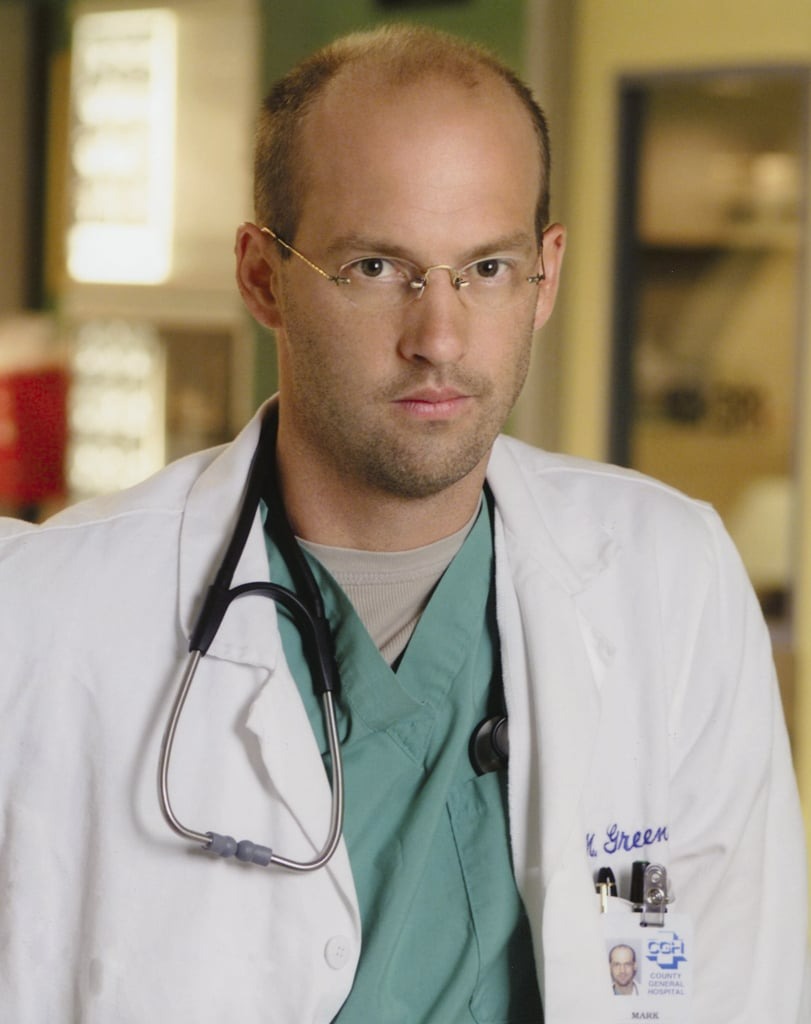
Anthony Edwards may not be familiar to younger audiences, but he was a household name from 1994 to 2002 for his role on ER, earning several awards, including a Golden Globe. After leaving the show at the end of its eighth season, Edwards took on minor roles in other television series, but none matched the success of ER. His most recent credit was in Tales of the Walking Dead.
Christopher Meloni captivated audiences as Detective Elliot Stabler in Law & Order: Special Victims Unit for 12 impressive seasons but left the show before its 13th season due to a contract dispute with the producers. Following his exit, he appeared in True Blood and Surviving Jack but has not managed to replicate the impact of his role on Law & Order.
Christopher Abbott portrayed Marnie’s on-again, off-again boyfriend Charlie Dattalo in the first two seasons of HBO’s Girls after his film debut in Martha Marcy May Marlene. Feeling that television was limiting him and disagreeing with the character’s direction, Abbott chose to leave the show. Unfortunately, he did not achieve the significant impact in Hollywood he had anticipated, appearing in less acclaimed projects like The Sinner and Catch-22.
Chad Michael Murray departed from One Tree Hill and his character Lucas Scott after six seasons. However, reports of ongoing contract negotiations for a seventh season suggested that Murray may not have been fully satisfied with his exit. His post-departure experiences have not been positive, as he has since revealed contract disputes related to One Tree Hill and his co-stars.
The Good Wife is regarded as one of the greatest legal dramas ever made, with Josh Charles, who portrayed Will Gardner, being one of its standout strengths. When he exited the show in a shocking manner, it left fans heartbroken, as well as Charles himself. Initially, he stated it was the right time for him to leave, but he has since reflected on the difficulty of “leaving a steady job.”
Steve Buscemi was initially cast to portray Tony Blundetto for two seasons on *The Sopranos*. However, after Blundetto committed murder, the show’s creator, David Chase, recognized that the victims’ friends would seek revenge, leading to the character’s demise. Buscemi felt heartbroken about this turn of events, stating, “I was really, really sad. That’s really just about missing the greatest job I’ve ever had.”
10+ Celebrities Who Regretted Leaving Popular TV Shows
Eduardo Gaskell
10.17.24
Landing a role on a hit TV show is a dream for many actors because it offers rare job security. But some grow restless and, after becoming famous, decide to leave. For some, like George Clooney leaving *ER*, it works out well. For others, it doesn’t, and many later regret leaving the show that made them famous.
Wil Wheaton (Star Trek: The Next Generation)
Wil Wheaton played Wesley Crusher during the first four seasons of *Star Trek: The Next Generation* before deciding to leave, hoping to move on to bigger opportunities in TV and film. Given that many fans found Crusher somewhat annoying (and an early example of a Gary Stu), it seemed like a risk-free decision. However, Wheaton’s career didn’t take off as planned. Now 49, he has since reflected, saying, “At first, I thought it was a smart career move… but I wasn’t prepared for how much I’d miss the people on set. After it ended, I just felt really ashamed of myself.”